Written by Kevin Robbie | 5th May 2025
With the increasing focus on wellbeing by government, is it time to rethink how we understand the cost–benefit of policy interventions?
Has Social Return on Investment (SROI) as a framework for measuring social, environmental and economic value matured to the point where it can replace traditional cost–benefit analysis (CBA) approaches to provide governments with a more holistic understanding of value that captures wellbeing?
Here I will outline five key reasons why SROI should be considered by governments at federal, state, territory and local levels.
Getting the definitions out of the way
To consider the questions above, two key definitions need to be clarified:
- Cost–benefit analysis (CBA) – CBA is a method of systematically comparing the costs and benefits of a policy decision to determine its feasibility and overall value.
- Social Return on Investment (SROI) – SROI is a framework for accounting for value. It is used to understand the social, environmental and economic value of a policy, project, activity or initiative. SROI provides a comprehensive view of the impact created in relation to the investment required and is used to support better decision-making.
For a quick summary of the differences between the two approaches see this article by the Australian Social Value Bank (ASVB).
Context: measuring what matters
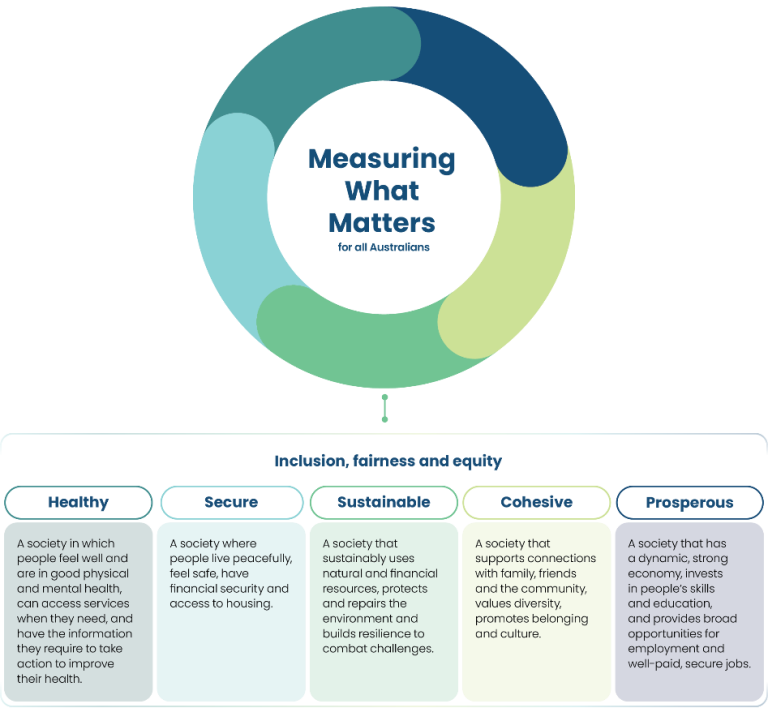
The Australian Government has developed their first national wellbeing framework – Measuring What Matters. This focus on wellbeing of people and planet is being taken up by governments across Australia and around the world.
The Measuring What Matters Framework has five wellbeing themes, tracking progress towards a more healthy, secure, sustainable, cohesive and prosperous Australia. The intention is for the Framework to be embedded into government decision-making, inform policy development and evaluation, and support different levels of government to work better together.
CBA has traditionally been used by governments at all levels in Australia as the key tool to understand the cost–benefit of policy interventions. But with a wellbeing focus, we need to consider new tools or approaches.
Using SROI to measure wellbeing
One of the key developments within SROI over the past few years has been the increased focus on understanding the wellbeing of people and planet, and using this insight to drive better decisions. This emphasis has been driven by Social Value International (SVI), the global network for social value and impact management practitioners.
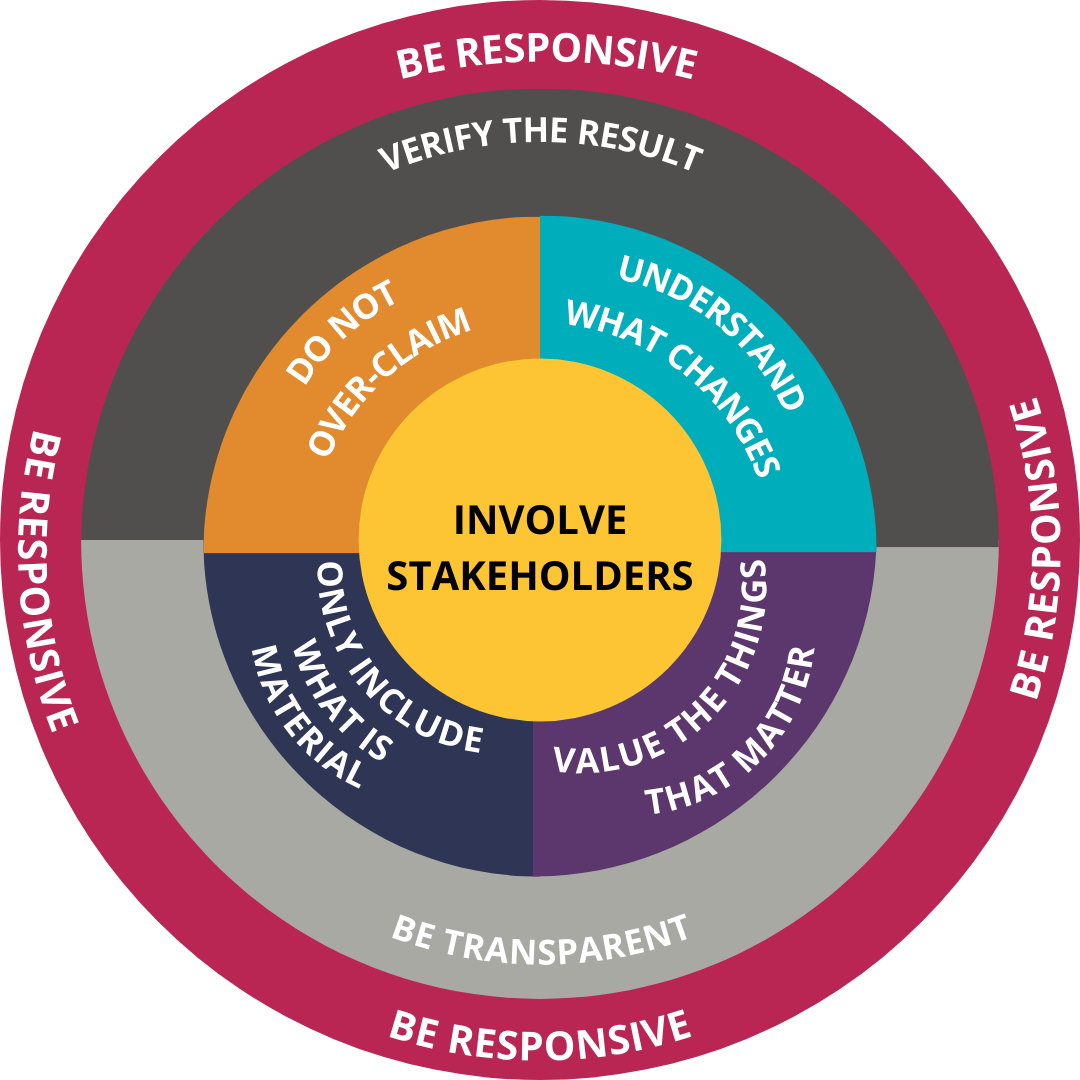
SROI is one of the key tools practitioners around the world are using to measure wellbeing. It does this by placing a financial value on social, environmental and economic outcomes. As a tool it adheres to the eight principles of social value (pictured below). To understand how SROI has developed over the past 25 years, see our article.
I am aware there are people who believe that social outcomes should not have a financial value placed on them. This article isn’t going to argue the pros and cons of that. In making policy decisions, government is already placing a financial value on social outcomes. The article is more focused on the question – within a wellbeing context, is SROI better placed to do this that CBA?
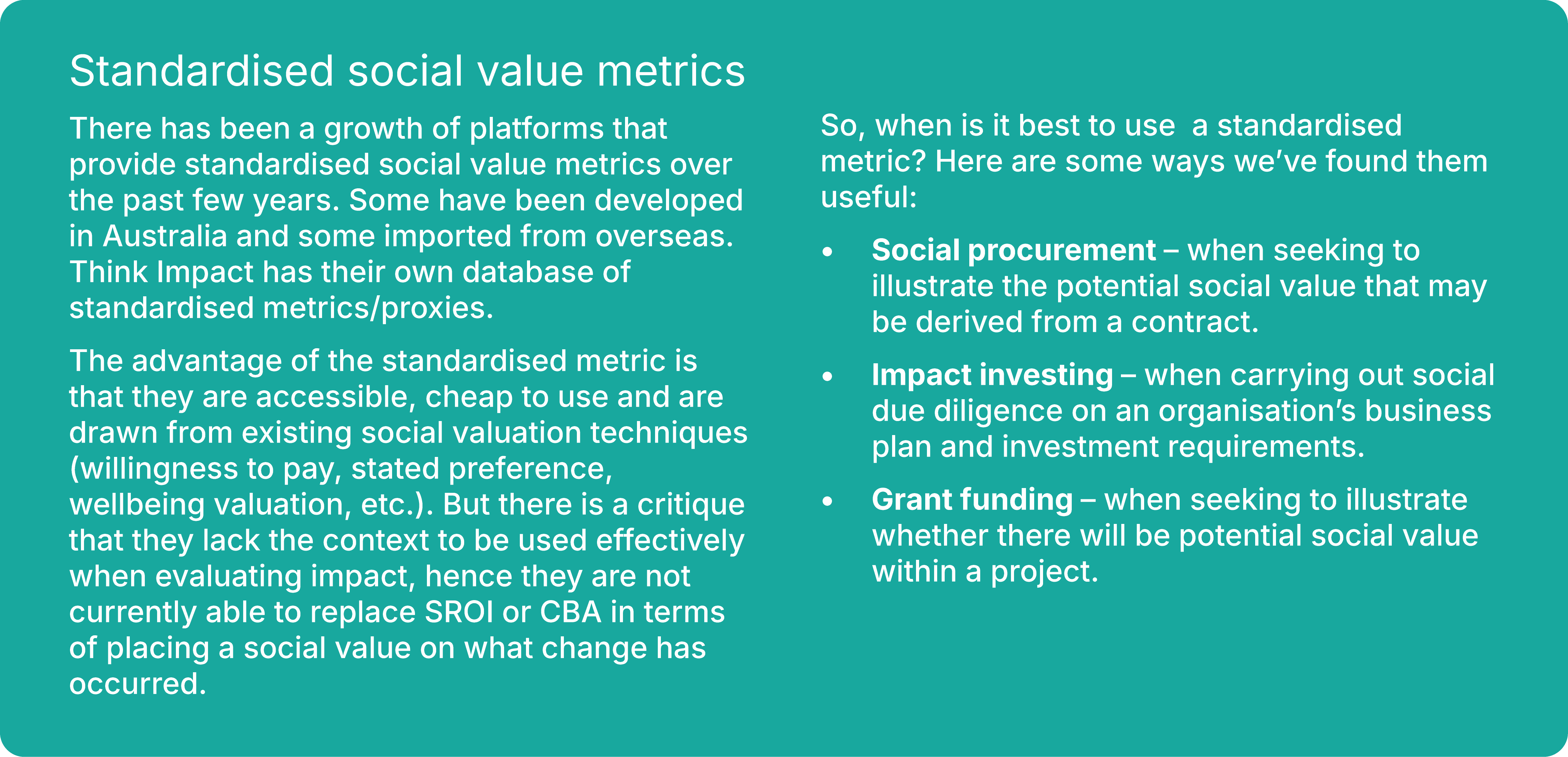
I am also aware that in recent years we have seen a rapid development of a series of social valuation tools that support illustrative social value to be communicated using ‘plug and play’ financial proxies. Some are more developed than others, with ASVB leading the way in Australia in terms of developing a set of wellbeing metrics. We see merit in these tools or standardised metrics, generally for illustrating potential social value. However, this approach raises some key questions:
- Who gets to decide what outcomes are happening and their value?
- How does it account for the context in which the value is experienced?
- How do average figures support appropriate decision-making?
SROI offers a standardised approach rather than a set of standardised metrics that places the stakeholder’s voice about the outcomes at the centre of decision-making.
But given the limitations around lack of understanding of context and not adhering to the principles of social value, we don’t think that many of the tools have developed the sophistication required to be genuinely used in a cost–benefit assessment within a wellbeing context. And they are often unsuited to any evaluative approach to understand social value.
But given SROI has been around for 25 years, has it now matured significantly to be able to replace CBA?
5 reasons to use SROI to understand cost–benefit
There is a growing focus across society on understanding social value (see our article on this topic). SROI is one of the key frameworks or tools to measure value. It is backed by a global network of practitioners who have been developing the framework for 25 years.
As a framework, SROI emerged from a fusion of existing disciplines including CBA, financial accounting, sustainability reporting, impact evaluation, impact measurement and social research. Best practice from each discipline has influenced the ongoing development over the past two decades. One influence of CBA on SROI is the legacy of providing a ratio regarding the social return delivered for the funding or investment required, a cornerstone of CBA.
SROI can be used in two ways:
- as an evaluative SROI during or at the end of an activity to understand what impact has been achieved
- as a forecast SROI before or at the start of an activity to predict where value might be achieved and improve decision-making around how to increase that value.
Our view at Think Impact is that a forecast SROI could replace more traditional CBA within a wellbeing context for five key reasons.
1. SROI involves stakeholders
SROI has as its key principle ‘involve stakeholders’. This central tenet drives applying the framework throughout each stage of the SROI process. Stakeholders are engaged in the process, and their voice and views are key to understanding impact or potential impact.
CBA is usually expert-driven with limited input from the people affected by the decision. From a wellbeing perspective, carrying out any form of cost–benefit assessment that is bereft of stakeholder view seems counterintuitive. The inductive and participatory drive within SROI is better suited to understanding the relative importance people place on changes to their wellbeing.
2. SROI provides a broader scope of social value
An SROI provides a broader scope of social value. CBA usually focuses on only the economic benefits without incorporating the wider social and environmental benefits that can occur. These can be seen as intangible and CBA struggles to account for them. SROI allows for assigned monetary proxies, using established valuation techniques, to account for broader value. Using a sensitivity analysis process within the SROI approach also allows for deeper analysis of where value is being derived for particular stakeholders or within domains of value (fiscal, organisational, environmental, cultural, individual wellbeing, etc). This provides deeper understanding of the flow of value.
3. SROI better captures the ripple effect of activities
SROI is more suited to capturing the ripple effect of activities that are providing long-term systemic change. Applying the principles of social value focuses on understanding the ‘value chain’ which traditional CBA doesn’t do. This allows for better understanding of the impact of more socially innovative or collective impact approaches.
4. SROI is more transparent
‘Be transparent‘ is one of the eight principles underpinning the SROI approach. Undertaking both a CBA or an SROI requires making assumptions, but the SROI process requires these assumptions (or professional judgements) to be laid out explicitly to increase reliability and validity. This improves trust in the findings.
5. SROI embeds ongoing impact measurement
Using a forecast SROI approach would embed the key building blocks for ongoing impact measurement and establish a baseline for measurement. The SROI process involves developing a theory of change, a value chain (or outcomes framework) identifying what will be measured and data collection tools. Usually, a CBA does not do this. The advantage to having these building blocks in place is that any evaluation of the impact achieved can be delivered against the established baseline, particularly if an evaluative SROI was required a few years down the line.
Moving forward
The case for using SROI to understand the cost–benefit of policy interventions is strong. However, it may take time for forecast SROI to replace CBA as the preferred approach.
One option that could be considered by all levels of government in Australia is to look more closely at SROI by shadowing their existing CBAs with a forecast SROI. Where appropriate, pilot projects could be established where a forecast SROI is undertaken alongside a CBA on a policy intervention to assess what additional insight is gathered from the SROI in terms of wellbeing improvements and whether this leads to better decision-making.
SROI is a step in the right direction for measuring what matters.