


Client
Regional Food Security Alliance
Albury–Wodonga, Bendigo, Geelong and Mildura | 2026
Key Services
Theory of change | Social Return on Investment (SROI) | Social Valuation
In regional Victoria, a network of Regional Food Hubs is operating social supermarkets as an innovative response to rising food insecurity across Australia – offering access to healthy food in a dignified, supermarket-style environment.
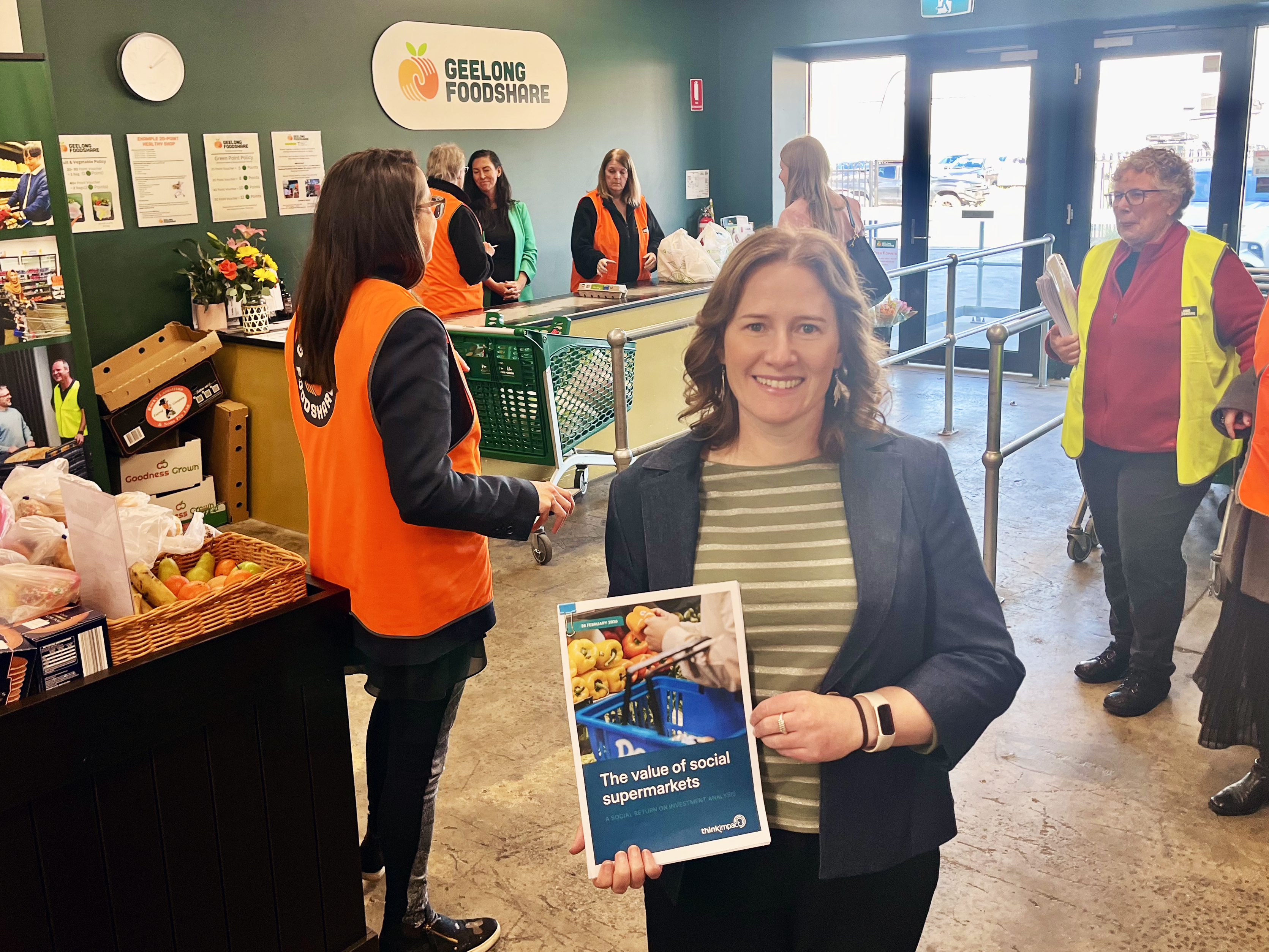
The Regional Food Security Alliance (RFSA) engaged Think Impact to measure the social value being created through social supermarkets operated by Albury Wodonga FoodShare, Geelong Foodshare, Sunraysia Mallee Ethnic Communities Council and Bendigo Foodshare. Using Social Return on Investment (SROI) methodology, the project explored not only whether the model works, but how it creates value for individuals, communities, government and the broader food system.
Think Impact conducted a SROI analysis across three established social supermarket models, alongside qualitative analysis of Bendigo Foodshare’s emerging pop-up market approach. Our work included 34 stakeholder interviews across food recipients, volunteers, community agencies, donors and government, and surveys completed by 482 food recipients and 93 volunteers.
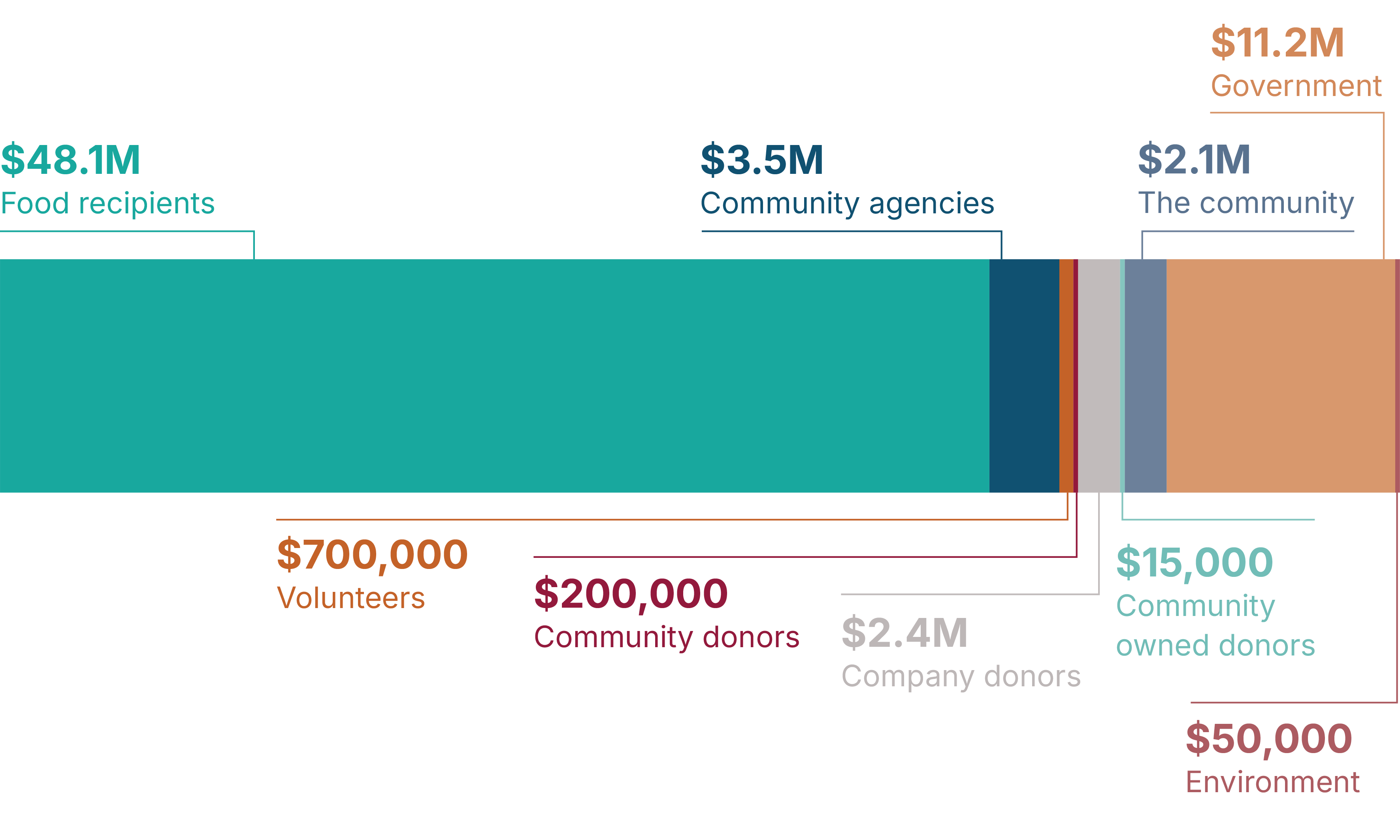
The findings demonstrated the extraordinary value social supermarkets create for communities. From a combined investment of $6.4 million across the social supermarkets, $68 million of social, economic and environmental value was created.
The majority of value flowed to food recipients ($48.1 million), reflecting the profound difference access to affordable, healthy food makes to people's lives – reduced stress, healthier eating, improved sense of self-worth, and greater opportunities to participate in everyday life. Children in food-insecure households benefited through better educational engagement and reduced worry at home.
Shopping at the social supermarket has changed things for me and my kids. With the voucher, I can fill a trolley with fresh fruit, vegetables, bread and other groceries that would normally be out of reach. – Food recipient
Significant value also flowed to government ($11.2 million) through reduced economic impacts of diet-related disease and children being better prepared for school. Community agencies ($3.5 million) reported being able to stretch their emergency relief budgets further and focus more effectively on their core organisational objectives.
The social supermarket makes it easier for us to make referrals and saves a lot of time. – Community agency
Perhaps most striking was the power of social capital. The Regional Food Hubs leverage community partnerships, in-kind donations and volunteer contributions by a factor of six – delivering at a scale far beyond what monetary funding alone could achieve.
Central to the SROI was understanding what makes social supermarkets distinctly valuable within the food relief ecosystem. Unlike food hampers or emergency relief – where people receive pre-selected items – social supermarkets give people the autonomy to choose their own groceries from a broad range of products, including fresh produce, culturally appropriate foods and household staples. This preserves dignity and agency, and reaches people who wouldn’t otherwise seek food support at all.
Beyond demonstrating impact, the SROI gave RFSA and the Regional Food Hubs a powerful evidence base to support future investment, advocacy and service planning –including a clearer articulation of that distinctive role social supermarkets play in the broader food relief ecosystem. As one community agency reflected:
In a world where people are now putting food on Afterpay, we need social supermarkets.
This project built on the foundation of our earlier SROI work with the Victorian Regional Foodshare organisations that demonstrated the significant value the distribution of food by the Foodshare network to people in need creates for regional Victoria.
Read the full report, The value of social supermarkets, here.
If you're working in the food relief sector or exploring how SROI could support your organisation, we'd love to talk.









Lightbox content